

September 2026 Mortgage Rate Update: What Canada’s Latest Jobs Report and Rate Decision Mean for Homeowners
Published September 2026
The first week of September delivered two major economic developments that are shaping the mortgage landscape in Canada: the Bank of Canada’s latest interest rate decision and a surprising employment report that showed the labour market may be starting to cool. [bankofcanada.ca], [canadianmo…trends.com]
If you’re a homeowner, homebuyer, or approaching a mortgage renewal, here’s what these latest developments mean and what I expect for mortgage rates through the remainder of 2026 and into 2027.
Bank of Canada Holds Its Policy Rate at 2.25%
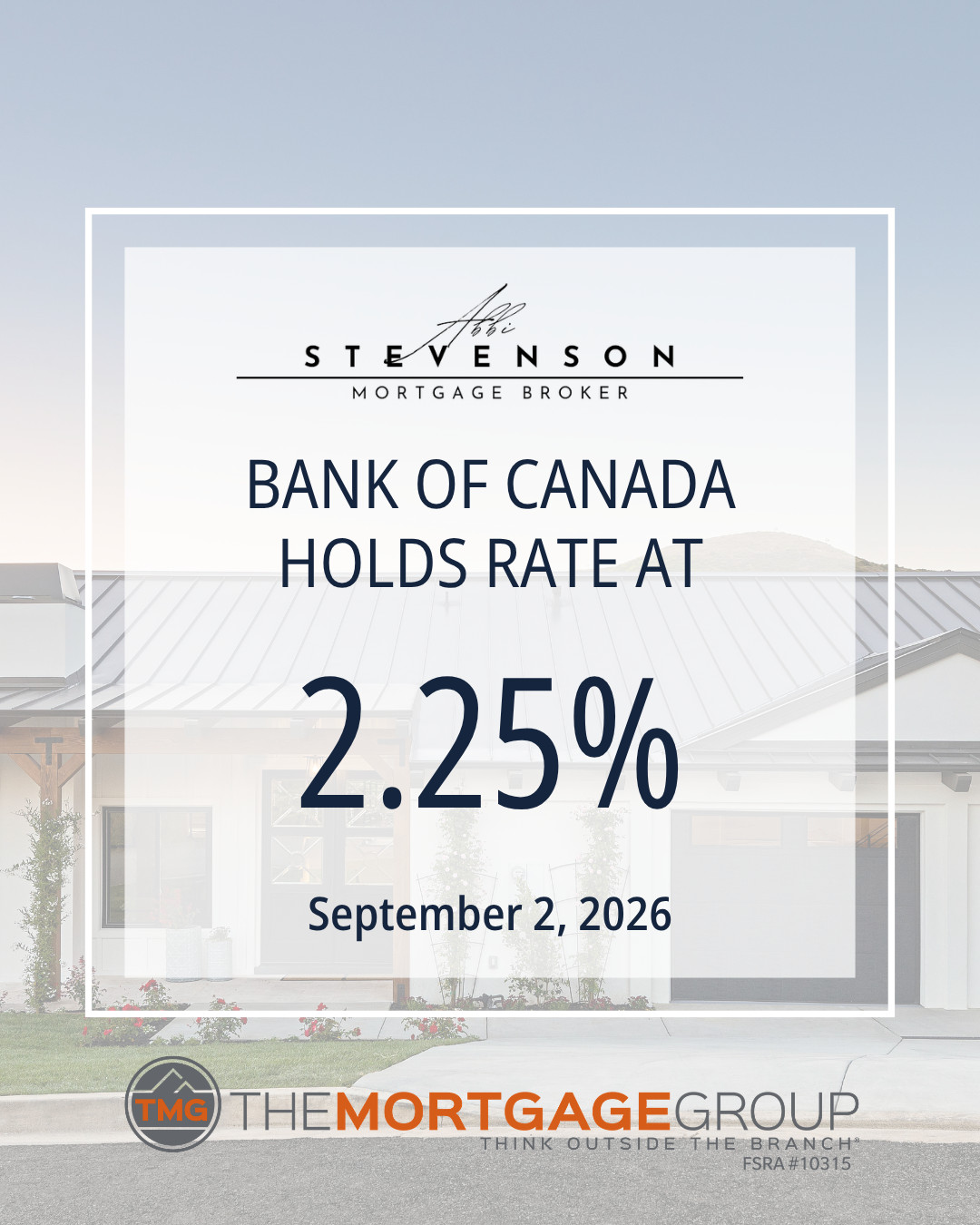
On September 2, the Bank of Canada announced that it would hold its overnight lending rate at 2.25%, leaving Prime Rate unchanged. The decision reflected the Bank’s view that while economic growth has improved, uncertainty remains elevated due to inflation concerns, geopolitical developments, and ongoing trade tensions. [bankofcanada.ca], [economics.td.com]
The Bank noted that:
- Canada’s economy grew at an annualized rate of 3.3% in the second quarter.
- Housing activity has rebounded.
- Inflation remains near 3%.
- Labour market conditions had shown improvement through July. [mtsinsights.com], [economics.td.com]
For Canadians with variable-rate mortgages or lines of credit, the September announcement means there was no immediate change to borrowing costs. [bankofcanada.ca], [michaelfri…manamp.com]
Then Came a Surprise: Canada Lost Jobs in August
Just two days after the Bank’s announcement, Statistics Canada released its August employment report, and the results were weaker than expected.
Canada lost 41,700 jobs in August, compared to economist forecasts that called for job growth. While the national unemployment rate remained unchanged at 6.4%, the details of the report suggested that parts of the economy may be slowing. [canadianmo…trends.com]
Some of the key highlights included:
- Job losses were concentrated in Ontario and Quebec.
- Finance, insurance, and real estate employment declined by nearly 10,000 positions.
- Retail, wholesale trade, and hospitality sectors also experienced losses.
- Public sector employment continued its recent downward trend.
- Wage growth slowed to 2% year-over-year, down from 3% the previous month. [canadianmo…trends.com]
While one month’s data doesn’t establish a trend, the report suggests that Canada’s economic recovery may not be as strong as recent GDP numbers indicated. Several economists have already suggested that this softer employment data makes near-term Bank of Canada rate hikes less likely. [canadianmo…trends.com]

Why Fixed Mortgage Rates Are Rising
One of the most common misconceptions in the mortgage market is that fixed rates move directly with Bank of Canada announcements.
In reality, fixed mortgage rates are primarily influenced by government bond yields, particularly the 5-year Government of Canada bond.
Recently, that benchmark has been moving sharply higher.
Canada’s 5-year bond yield touched a 52-week high of 3.448%, reaching its highest level in over a year. The yield has risen nearly 80 basis points since its low earlier this year and approximately 20 basis points since late August. [canadianmo…trends.com]
The increase has been driven by:
- Rising global bond yields.
- Stronger-than-expected U.S. employment data.
- Inflation concerns.
- The Bank of Canada’s more cautious tone regarding future inflation risks. [canadianmo…trends.com], [economics.td.com]
As a result, many lenders have already increased fixed mortgage rates, and additional rate increases remain possible if bond yields stay elevated. [canadianmo…trends.com]
What This Means for Variable Mortgage Rates
The outlook for variable rates is somewhat different.
The Bank of Canada continues to face a difficult balancing act. On one hand, inflation remains above its 2% target. On the other hand, recent economic data, like the August employment report, suggests the economy may be losing momentum. [bankofcanada.ca], [canadianmo…trends.com]
Because of these competing forces, the most likely outcome over the coming months is continued stability in the overnight rate.
While the possibility of future rate changes always exists, the weaker jobs report makes it harder to justify rate hikes in the near term. [canadianmo…trends.com], [economics.td.com]
My Mortgage Rate Outlook for the Rest of 2026
Based on current economic conditions, here’s what I’m watching:
Variable Rates
I expect the Bank of Canada to remain cautious and leave rates unchanged unless inflation unexpectedly accelerates again. Current economic conditions support a “wait and see” approach. [bankofcanada.ca], [canadianmo…trends.com]
Fixed Rates
Fixed rates will likely continue to be influenced by bond market volatility. If bond yields remain near current levels, we could see continued upward pressure on lender pricing through the fall. [canadianmo…trends.com]
Housing Market
Stable variable rates combined with improving confidence have supported housing activity in recent months. However, higher fixed rates could affect affordability for some buyers moving forward. [mtsinsights.com], [economics.td.com]

Looking Ahead to 2027
Forecasting interest rates is never an exact science, but the current environment suggests that dramatic rate moves in either direction are unlikely.
The Bank of Canada will continue monitoring:
- Inflation trends.
- Employment growth.
- Consumer spending.
- Housing market activity.
- The impact of trade tensions on economic growth. [bankofcanada.ca], [canadianmo…trends.com]
If economic growth slows meaningfully in 2027, there may be room for lower rates. If inflation proves more persistent than expected, rates could stay higher for longer.
For now, a relatively stable rate environment remains the most probable scenario. [economics.td.com], [canadianmo…trends.com]
Final Thoughts
The biggest takeaway from September’s economic news is that the mortgage market is receiving mixed signals.
The Bank of Canada sees inflation risks that justify caution, while the latest employment report suggests economic growth may be softening. Meanwhile, bond markets have pushed fixed mortgage rates higher despite no change to the Bank’s policy rate.
If your mortgage is renewing in the next 6 to 18 months, you’re considering a refinance, or you’re looking to purchase a home, this is an excellent time to review your options and develop a strategy that aligns with your goals.
Have questions about your mortgage or renewal? Let’s connect and discuss your options.


