Congratulations on Buying Your First Home
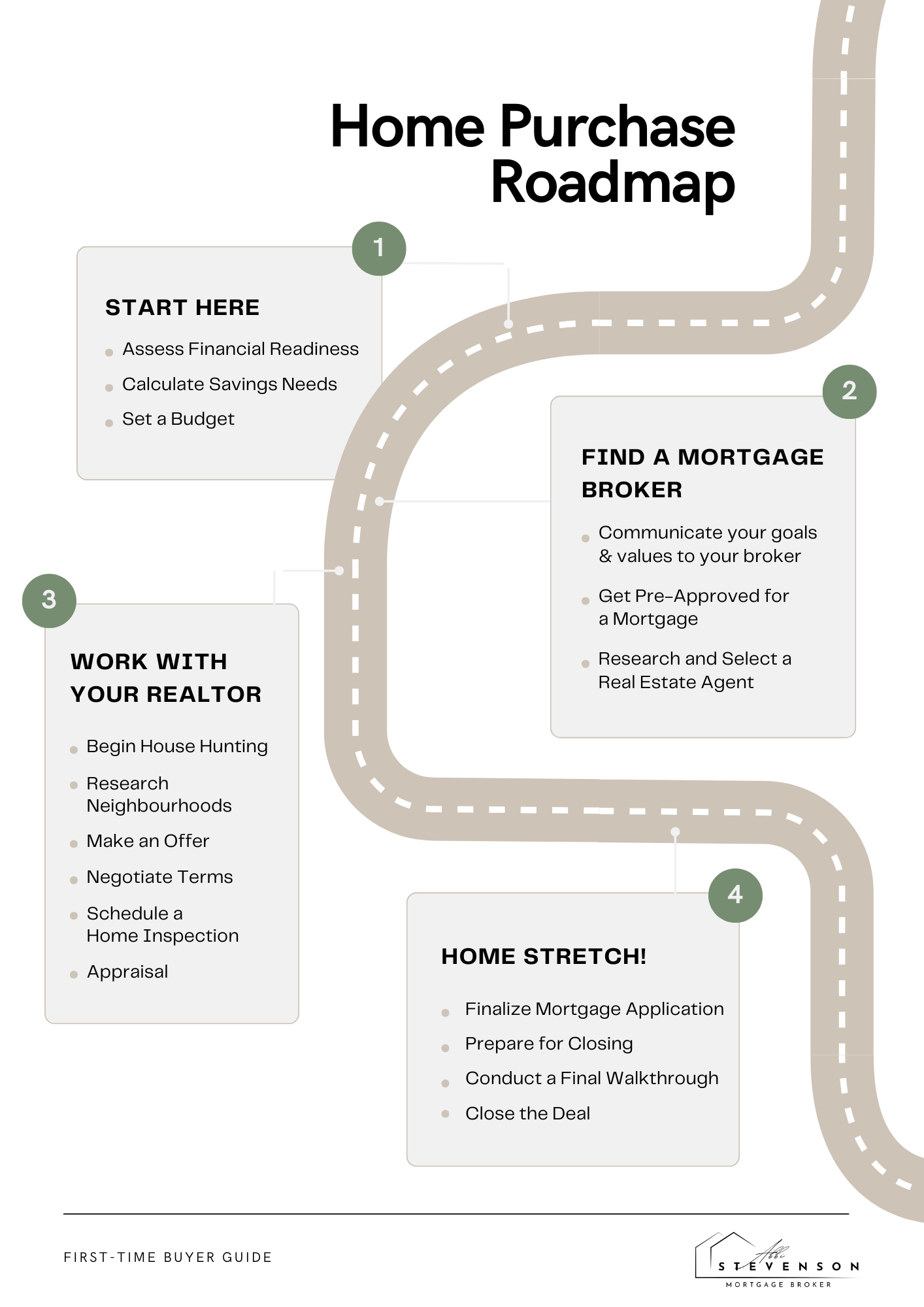
Congratulations on taking this significant step towards homeownership! Whether you’re just beginning to explore your options or diving into the details of mortgage rates and property inspections, this guide is here to help you navigate the ins and outs of the home buying process with confidence.
Key Points:
Understanding Mortgages: Explore different types of mortgages suited to your needs.
Saving for a Down Payment: Learn tips on budgeting and saving effectively.
Navigating the Home Buying Process: Get insights on property inspections and making offers.
“Buying your first home is not just a financial investment, it’s a place to create memories.”
Let’s embark on this journey together, ensuring you feel empowered and well-prepared every step of the way!

Amortization
What is amortization and how does it work?
Amortization is the process of paying off a loan through regular payments, which consist of principal (the amount borrowed) and interest (the cost of borrowing).
The length of the amortization period affects monthly payments and total interest paid:
- Shorter Amortization Periods (e.g., 15 years): Higher monthly payments but lower total interest, allowing for faster repayment.
- Longer Amortization Periods (e.g., 30 years): Lower monthly payments, making it more affordable initially, but resulting in higher total interest over time.
New Amortization Policy Effective December 15th, 2024
- Starting December 15, 2024, a 30-year amortization period will be available to:
- All first-time homebuyers, regardless of whether they are purchasing new or resale homes.
- All buyers of newly-built homes.
- This change aims to provide greater flexibility and make homeownership more accessible by lowering monthly payments for buyers.
Term
What is a mortgage term?
A mortgage term refers to the length of time you are committed to a mortgage agreement with a lender, including the interest rate, payment schedule, and other conditions. Mortgage terms in Canada typically range from a few months to five years, although longer terms up to 10 years are also available.
Fixed vs. Variable Rates
During a mortgage term, you may choose between a fixed or variable interest rate:
- Fixed Rate: Your interest rate remains the same throughout the term
- Variable Rate: Your interest rate can fluctuate based on the prime lending rate. This can result in lower initial rates but also introduces the risk of increasing rates
Renewing or Refinancing
When a mortgage term ends, you have the option to renew the mortgage with your current lender, negotiate new terms, or switch to another lender. You might also choose to refinance, which involves reapplying with the same or with a new lender to borrow a larger amount of money.
Considerations When Choosing a Mortgage Term
- Interest Rate Trends: If interest rates are expected to rise, a longer-term fixed mortgage might be beneficial.
- Financial Goals: Consider how long you plan to stay in the home and your long-term financial plans.
- Risk Tolerance: Decide whether you prefer the predictability of a fixed rate or the potential savings of a variable rate.
Choosing the right mortgage term is a critical financial decision that should align with your personal circumstances and market conditions.
Down Payment
What is a down payment?
A down payment is a lump sum of money paid upfront by homebuyers towards the purchase price of a property. Typically expressed as a percentage of the total purchase price, common down payment percentages range from 5% to 20% or more, depending on the type of mortgage and lender requirements.
A larger down payment reduces the amount borrowed and, consequently, lowers monthly mortgage payments. It also demonstrates financial stability to lenders, potentially securing better loan terms and avoiding the need for mortgage default insurance in some cases.
In Canada, the minimum down payment required depends on the purchase price of the home
- For properties priced up to $500,000, the minimum down payment is 5% of the purchase price.
- For homes priced between $500,000 and $1,499,999, the minimum down payment is 5% on the first $500,000, plus 10% on any amount over $500,000.
- For homes priced at $1.5 million or more, the minimum down payment is currently 20%.
What is Default Insurance?
Mortgage default insurance is an insurance that protects the lender for losses in the event a borrower defaults on their mortgage payment but is paid for by the borrower. Without default insurance, the risk of loss to lenders would be too high for them to offer affordable mortgages to client with less than 20% down. Default insured mortgages tend to have the lowest interest rates, since the insurance virtually eliminates the risk of potential loss and interest rate is a reflection of risk.
Who needs default insurance??
Mortgage default insurance is required for any borrower with less than a 20% down payment.
How is the insurance paid for?
The cost of the insurance is added to your mortgage balance. Only the HST on the default insurance fee must be paid for out-of-pocket at closing.

How Much Can You Afford?
Affordability is determined by assessing the ratio of shelter costs to gross income as well as the ratio of overall debt payments to gross income. These are referred to as debt ratios. Shelter costs are comprised of mortgage payment, property taxes and heating costs. For most mortgage applications and all applications that require default insurance, shelter costs can add up to 39% of the borrowers’ gross income. Overall debt considers shelter costs as well as loan payments, credit card payments,, as well as child support and alimony obligations. Overall debt can add up to 44% of borrowers’ gross income.
How does it work?
The stress test requires lenders and broker to calculate the mortgage payment (for the purposes of calculating debt ratios) at an interest rate of 5.25% or the actual rate you are being offered + 2%., whichever is greater.
Mortgage Calculators

Fixed vs Variable Rate
FIXED rate:
- Interest rate remains constant throughout the term of the loan
- Payments remain consistent and predictable
- Typically higher initial interest rates compared to variable rates
- Provides stability for budgeting and financial planning
- Typically offered with flexible terms ranging from 1 to 10 years
- May have higher penalties for paying off/breaking mortgage early as compared to variable rate mortgages
- Ideal for those seeking predictability and long-term stability in payments
VARIABLE rate:
- Interest rate may fluctuate based on market conditions and economic factors
- Payments can vary, potentially increasing or decreasing over time
- Typically lower initial interest rates, offering potential cost savings early on
- Requires flexibility in budgeting due to potential rate changes
- Terms may vary, but typically longer terms are not available
- Borrowers can usually opt to convert to a fixed rate mortgage without penalty
- Penalties for early payment are typically capped at 3 months interest
- Suitable for borrowers comfortable with potential rate and fluctuations and initial lower payments
Credit
Credit plays a crucial role in obtaining a mortgage as it determines your eligibility and the terms you receive.
Maintaining a Strong Credit Score
To improve your chances of securing a mortgage:
- Pay Bills on Time: Ensure all bills are paid promptly.
- Keep Credit Card Balances Low: Aim for low balances relative to your credit limits.
- Avoid New Credit Applications: Refrain from applying for new credit close to your mortgage application.
Actions to Avoid
It’s important to avoid the following before or during the mortgage process:
- Large Purchases: Do not make significant purchases that could affect your debt-to-income ratio.
- Opening New Credit Lines: Avoid opening new credit accounts.
- Closing Existing Credit Accounts: Do not close existing accounts, as this can shorten your credit history.
- Co-signing Loans: Refrain from co-signing loans or taking on additional debt.
Benefits of Healthy Credit
Healthy credit is essential for securing favorable mortgage terms:
- Lower Interest Rates: A strong credit history can qualify you for lower interest rates, saving thousands over the loan’s life.
- Enhanced Borrowing Power: A high credit score increases your borrowing capacity and chances of mortgage approval.
Mortgage Payment Breakdown
What are your payments made of? Mortgage payments are typically divided into several key components: principal, interest, taxes, and insurance.
PRINCIPLE
The principal in mortgage payment breakdown refers to the portion of each payment that goes toward reducing the outstanding balance of the loan amount borrowed for the home purchase.
INTEREST
The interest is the cost of borrowing that principal, calculated based on your loan balance and interest rate.
TAXES
Taxes for mortgage payment breakdown typically include property taxes, which are paid annually or semi-annually and can be included in your monthly mortgage payments through an escrow account.
INSURANCE
Insurance for mortgage payment breakdown usually includes homeowner’s insurance, which covers property damage and liability, and may also include mortgage default insurance, if your down payment is less than 20% of the home’s value.
Costs of Homeownership
Ongoing Costs of Homeownership:
- Mortgage Payments: This includes monthly payments towards the loan principal and interest, representing the primary ongoing cost of homeownership.
- Property Taxes: Annual taxes based on the assessed value of your property, usually paid in installments and essential for local government services.
- Homeowners Insurance: Monthly or annual premiums covering damage to your home and personal property from hazards like fire, theft, and natural disasters.
- Utilities: Regular costs for essential services such as electricity, water, gas, trash collection, and sewer fees necessary for daily living.
One-Time Costs of Buying a Home:
- Down Payment: The upfront sum paid towards the home’s purchase price, reducing the amount of the mortgage.
- Closing Costs: Fees such as legal fees, title insurance, and transfer taxes, typically 1.5-4% of the home’s purchase price, paid at closing.
- Appraisal Fees: A one-time fee for a professional appraiser to assess the home’s value, usually required by lenders.
- Home Inspection Fees: A one-time fee for a professional inspection to identify potential issues or repairs needed before purchase.
Future Costs to Budget For:
- Major Repairs and Replacements: Significant expenses for essential repairs or replacements, such as a new roof or HVAC system.
- Renovations and Upgrades: Costs for future improvements and upgrades to maintain or increase your home’s value, like remodeling a kitchen or bathroom.
- Insurance Premium Increases: Anticipate possible rises in homeowners insurance premiums due to inflation, changes in coverage, or claims history.
- Property Tax Increases: Be prepared for potential increases in property taxes due to rising property values or changes in local tax rates.
Pre-Qualify vs Pre-Approval
Pre-qualification and pre-approval are two key steps in the mortgage process, but they serve different purposes.
Pre-Approval:
A more thorough evaluation where a lender verifies your financial information to provide a specific loan amount you are approved for.
- Process: Formal and detailed, requiring a comprehensive review of your financial situation including income verification, credit check, and asset review.
- Documentation: Requires extensive documentation such as pay stubs, tax returns, bank statements, and credit history.
- Credit Check: Involves a hard credit check, which can temporarily impact your credit score.
- Reliability: Provides a conditional commitment from the lender for a specific loan amount, making it more reliable and favourable to sellers.
- Use: Essential for serious homebuyers; demonstrates to sellers and real estate agents that you are a qualified and serious buyer.
Essential Documents
Here’s a list of documents you’ll need to be prepared with to facilitate a smooth purchasing process:
- Pay Stubs: Recent pay stubs verify your current income and employment status.
- Tax Returns: Tax returns from the past two years provide a comprehensive view of your income history and stability.
- Employment Verification Letter: A letter from your employer confirms your job title, salary, and length of employment.
- Bank Statements: Statements from the past three months to verify your savings, checking, and other liquid assets.
- Government-issued ID: A valid photo ID, such as a passport or driver’s license, confirms your identity.
- Social Insurance Number (SIN) Card: Used for identity verification and credit checks.
- Gift Letter (if applicable): A letter states that funds provided for the down payment are a gift and not a loan.
- Purchase Agreement: A signed purchase agreement details the agreed-upon price and terms of the home sale.
- MLS Listing: The Multiple Listing Service listing provides detailed information about the property being purchased.
- Separation Agreement (if applicable): A copy clarifies any alimony or child support obligations or income.
Home pros you need your journey
Realtor
A realtor helps you navigate the real estate market, find suitable properties, and negotiate offers on your behalf. They have local market knowledge, access to listings not always available to the public, and can provide guidance throughout the buying process, ensuring you make informed decisions.
Home Inspector
A home inspector conducts a thorough assessment of the property’s condition, identifying any potential issues or necessary repairs. Their report helps you understand the true condition of the home before finalizing the purchase, allowing you to negotiate repairs or adjust your offer accordingly.
Real Estate Lawyer
A real estate lawyer ensures all legal aspects of the transaction are handled correctly. They review contracts, perform title searches, and ensure the property’s title is clear and transferred properly. They also handle the closing process, ensuring all documents are properly executed and funds are transferred securely.
Mortgage Broker
A mortgage broker helps you find the best mortgage product and interest rate based on your financial situation. They work with multiple lenders and can provide access to a range of mortgage options that suit your needs. They also assist with the mortgage application process, guiding you through paperwork and ensuring you understand your mortgage terms.
Closing on your home
Closing Fees
Closing fees, commonly known as closing costs, encompass various expenses incurred to complete the purchase of a home. These typically include legal fees for a lawyer or notary public to facilitate the transaction and ensure all documents are in order.
Additional Costs
Additional costs may include land transfer taxes, which vary by province, and title insurance to protect against any issues with the property’s title. Appraisal fees are also common to assess the property’s market value. During the closing process, which usually takes place at the lawyer’s office or a notary public’s office, several key steps occur. Buyers and sellers sign the necessary legal documents, including the mortgage agreement, property transfer documents, and any applicable disclosures.

Mortgage Terms Glossary
Amortization: The period over which the mortgage loan is scheduled to be paid off, typically ranging from 25 to 30 years in Canada.
Interest Rate: The cost of borrowing money, expressed as a percentage, charged by the lender on the mortgage loan.
Down Payment: The initial upfront payment made by the buyer towards the purchase price of the home, expressed as a percentage of the total price.
Principal: The original amount of money borrowed for the mortgage, excluding interest and other fees.
Term: The length of time the mortgage agreement with the lender is in effect, typically ranging from 1 to 10 years.
Fixed-Rate Mortgage: A mortgage where the interest rate remains constant throughout the term, providing predictability in monthly payments.
Variable-Rate Mortgage: A mortgage where the interest rate fluctuates with changes in the lender’s prime rate, affecting monthly payments.
Mortgage Default Insurance: Insurance required for down payments less than 20% of the home’s purchase price, protecting the lender against borrower default.
Frequently Asked Questions
What are your payments made of? Mortgage payments are typically divided into several key components: principal, interest, taxes, and insurance.
What is home equity and how can it be used?
Home equity is the difference between the current market value of a home and the outstanding mortgage balance. It can be accessed through home equity loans or lines of credit to fund renovations, investments, or other financial needs.
What is a prepayment penalty?
prepayment penalty is a fee charged by lenders if the borrower pays off the mortgage loan before the end of the term, This applies if the home is sold, the mortgage moved to a new lender or if the mortgage is refinanced. It’s important to review the terms of the mortgage agreement to understand any potential penalties.
What does it cost to use a mortgage broker?
For most borrowers, there is no cost for using a mortgage broker. Brokers are paid a referral fee by lenders. Typically, borrowers are only charged broker fees if they require the use of alternative or private lender.
What is a home appraisal and why is it necessary?
A home appraisal is an assessment of a property’s value by a licensed appraiser to ensure the property’s worth matches the loan amount requested. It helps lenders determine the loan-to-value ratio and mitigate lending risks.
What are property taxes and how are they calculated?
Property taxes are taxes levied by municipalities based on the assessed value of the property. They fund local services such as schools and infrastructure. Tax rates vary by location and are typically calculated annually.
Program & Rebates
Navigating homeownership can sometimes require extra support. Below, is a compiled list of programs and rebates available in Canada to assist you along your journey.
This allows first-time buyers to withdraw up to $60,000 from their Registered Retirement Savings Plan (RRSP) tax-free to put towards a down payment.
Land Transfer Tax Refunds for First-Time Homebuyers (ON)
First-time homebuyers of an eligible home may be eligible for a refund of all or part of the tax.
The Tax-Free Home Savings Account (FHSA)
This account allows you to save for your first home. It allows you to make tax-deductible contributions up to $8,000 every year and up to a life-time maximum of $40,000
First-Time Home Buyers’ Tax Credit (HBTC)
This non-refundable tax credit provides up to $750 in federal tax relief for eligible first-time buyers.
The GST/HST New Housing Rebate in Canada offers a refund on a portion of the GST or HST paid for purchasing, constructing, substantially renovating, or adding major additions to a new home. This rebate helps make housing more affordable by reducing the tax burden on these projects.
Congratulations!
Congratulations on purchasing your first home! This marks an exciting milestone in your journey towards homeownership. It’s a moment to celebrate your achievement and envision the future you’ll build in your new space.
May your new home bring you joy, comfort, and countless happy memories. Here’s to creating a place filled with love and warmth. Wishing you all the best as you embark on this new chapter of your life!

Download a PFD copy here!



